Pages

Tuesday, 1 May 2012

Experiment-Face Close-Ups


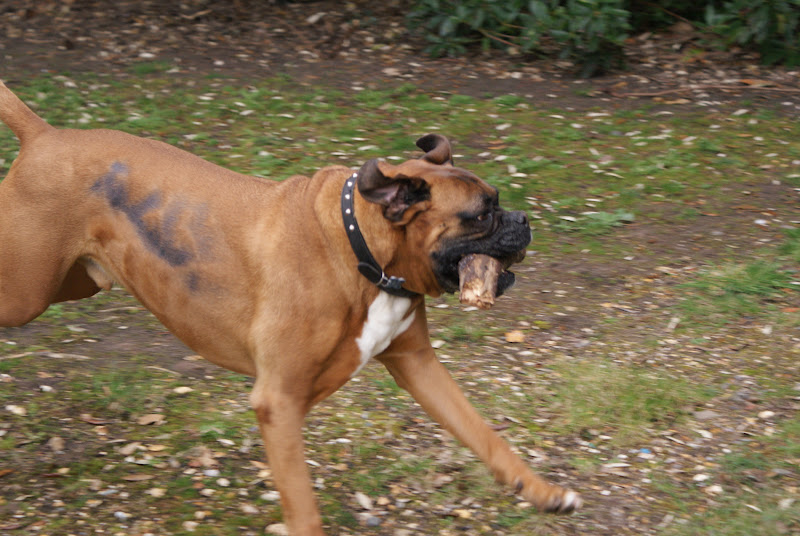
In this experiment, I tried to get photos of Bongos face up close so that I could get good action shots. I did this experiment because it would be interesting to see what a dog's face looks like in motion as owners can't see it very well.
It was very hard for me to get a good angle when I was taking a photo of Bongo's face because I didn't have a lot of time to set up because Bongo would run past me and I wouldn't get a photo at all. Because of this I got Bongo to wait and position myself so that the camera had more time to focus.
It was also hard for me because the camera took a long time to focus on Bongo's face meaning that I had to take the picture before the camera had focused so that he didn't run past before I could get a photo. Because of this I got Bongo to wait and position myself so that the camera had more time to focus.
Because I didn't have time to position the camera, it meant that some of the photos I took wouldn't have all of Bongo in it meaning it wasn't a very good photo. Instead I tried to position myself before I took the photo and got Bongo to wait. Another solution I used was to take a series of photos and pick the best ones out of the series.
Because there was different lighting in different areas, some had intense and some dark, I couldn't adjust the the aperture, exposure, ISO or the shutter speed in time for Bongo to be in motion. Because of this I took the photos in the day when the light intensity was greatest.


I really enjoyed doing this project because I learnt how important it is to get detailed photos of animals when photographing them but also how difficult it is to get really close up action shots because it is easy to miss the animal or have them blurred etc. This experiment gave me the idea to make a film becuase it would be easier to follow the dog's face whilst it was in focus and study its movement.

Experiment-Jump Around


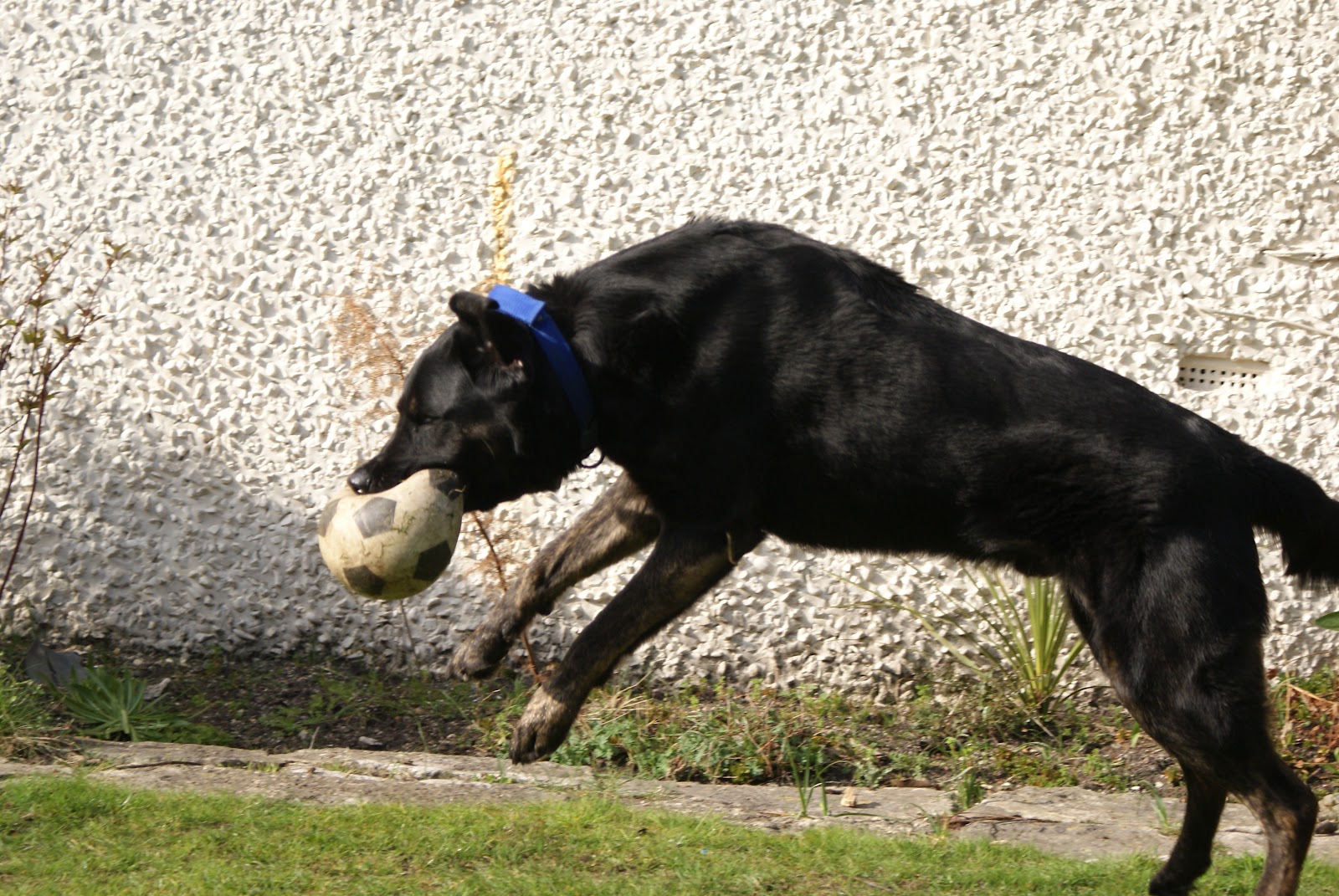
This experiment was with my Nan's dog called Billy who is very energetic. For this experiment, I kicked a ball up into the air and as it was mid-air, I took photos of him as the ball fell so that I would take a photo of Billy catching the ball.
My first problem with this experiment is that some of the garden was shaded and so I had to stay away from the shaded area and into the sun so that I could use a faster shutter speed and the image would be clearer.
Another problem was that I was on a hill and so the ball would bounce downwards, this meant that Billy would run away from me and so I wouldn't get a good photo. I overcame this by standing at the bottom of the hill and took photos from there.
Another problem was that Billy would run away from me to chase the ball so I couldn't get a very good picture. I overcame this by setting up my camera on a tripod with a timer so that I could concentrate more on kicking the ball into the view of the camera to get a better, steady photo with Billy facing the camera.
However, this meant that not all of Billy was in the picture so I didn't use this method a lot.

My next problem was that some of the photos were out of focus. This is because I didn't have a lot of time to focus between me kicking the ball and the ball hitting the ground as Billy tries to catch it. My camera was on automatic focus which took some time to focus on Billy which meant that I had to take a picture before the camera had properly focused on Billy but had focused on the background. To solve this, I focused the camera on Billy before I kicked the ball in the air and didn't let go of the shutter so that it wouldn't focus on anything else. I would then kick the ball and point the camera at Billy to get a focused picture.


I enjoyed doing this experiment a lot because I learnt a lot for the next experiments and my final outcome and how to take photos of something whilst it is moving quickly. I thought I got some good photos from doing this experiment and I was generally pleased with the outcome. 

Wednesday, 21 March 2012

Research

Edweard Muybridge.
Edweard used multiple cameras to capture the movement of animal locomotion. He then created the zoopraxiscope. The zoopraxiscope projected images from rotating glass disks in rapid succession to give the impression of motion. It was the first example of stop motion animation.
He made all of these images and then put them in order to make an animation so that it would make the sense that the horse is moving like in the film below.

This was the first scientific proof that a horse lifted all of its feet off the ground when it ran. Muybridge also created a phenakistoscope disc of a couple waltzing.
This then turned into a zoopraxiscope when spun around with a film camera focused on one part of the picture. When the disc spun round, it would make this film.
I like this work because it shows how movement can be captured in photos to discover new things about that movement. I will take from this work the idea of discovering how animals move and to find out if my dog's feet leave the ground when he is running. I will also make animations of my dog running.
Carli Davidson.
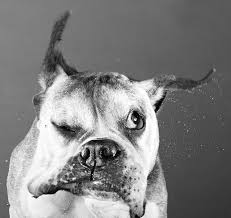
Shake is a small series of dog shots shaking off water. For this project, Carli sprayed water onto the dogs so that they would shake. She used a high shutter speed to capture their faces as they were shaking.
I like this project because each photo is unique and because it is exciting to see the dogs faces distorted as we have never seen a dogs face as they shake close up before. I also think it has a good emotional connection to viewers because it has humour and relevence to dog owners. I will take from this work the idea of movement in dogs which has never been seen before and close ups of a dogs face when in motion.

Anita Peeples
Anita takes photos of her own dog in different moving positions but she does it as a hobby and not for any projects.
Picture of two Boxers playingPicture of Boxer with sandy face
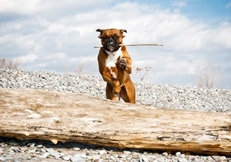
Picture of Boxer with stick 
Picture of wind blowing in boxers ears


Picture of Boxer coming down a dunePicture of Boxer jumping in snowPicture of very happy Boxer
I like these photos because they show the Boxer doing different things in motion, such as fighting, running and jumping. I will take from this work that I should get my dog in lots of different situations so from this I decided to make a film of my dog on a dog walk.

Gopro cameras:
My final outcome was based on a TV programme that I saw which showed a camera mounted onto a bird's back and recorded the bird's journey. This idea inspired me to do the same but with my dog, Bongo. This idea of seeing from a 'bird's eye view' is very recent and there are only a small amount of films with animals in hem using gopro cameras. I didn't use a gopro camera, instead I used a normal lightwieght camera which was just as good and Bongo didn't mind. Becuase the idea is very new, there aren't any artists that I could find that used these cameras to film animals, so instead, I would recommend you watch these youtube videos that use gopro cameras.